
 Rishi
Rishi From UAN to Digital Wallets: The Evolution of Tools Used to Prevent Resume Fraud in Hiring
In the rapidly shifting landscape of global talent acquisition, the traditional paper resume is becoming an artifact of the past. As we progress into 2026, the methods used by dishonest candidates to inflate their credentials have become increasingly sophisticated, powered by generative AI and synthetic identity tools. Consequently, the background verification (BGV) industry has had to undergo a radical technological metamorphosis. To prevent resume fraud in hiring, organizations have moved from manual, trust-based systems to decentralized, data-driven identity ecosystems.
The financial stakes have never been higher. A single bad hire, particularly one based on fraudulent experience, can cost a company triple the employee’s annual salary in lost productivity, legal fees, and re-recruitment costs. Therefore, understanding the evolution of verification tools—from the humble Universal Account Number (UAN) to the futuristic Digital Wallet—is no longer just for HR tech enthusiasts; it is a fundamental requirement for business security.
The Foundation: UAN and the Birth of the Digital Identity Anchor
Before the digital revolution, verifying an applicant’s tenure was a tedious process of “cold calling” previous HR departments. This era was rife with “resume mills” and fake experience certificates. The first major shift toward modern security occurred with the implementation of centralized government identifiers, such as the Universal Account Number (UAN).
To leverage this digital anchor effectively, businesses should partner with providers of employment background verification services who can automate the extraction of these tamper-proof records
Why UAN Changed the Game
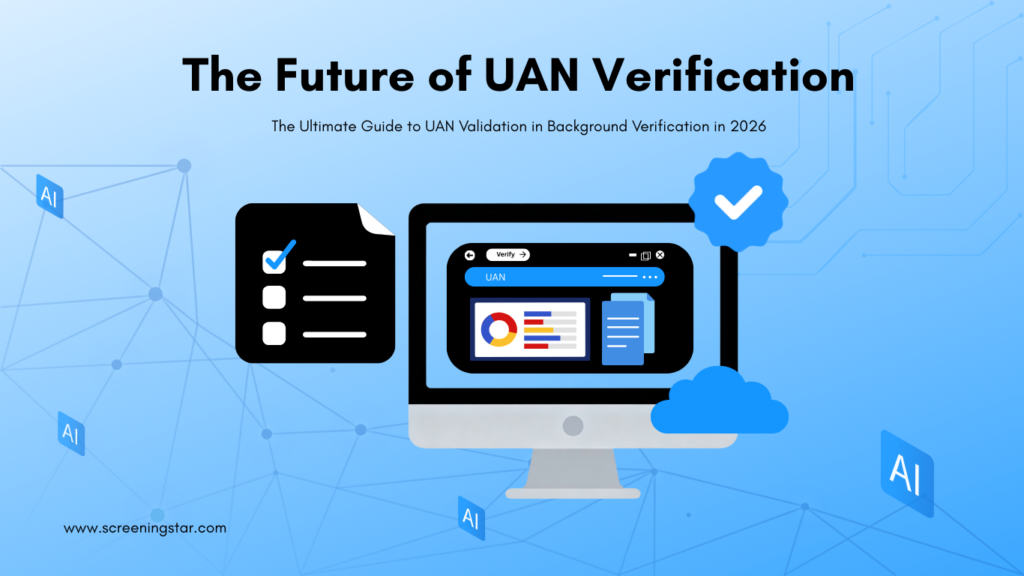
The UAN serves as a permanent, portable identity for employees within a national pension or provident fund system. For the BGV industry, this became the “gold standard” for determining how to verify an applicant’s work history.
- Direct Source Truth: Instead of relying on a printed letter, BGV providers use API integrations to pull data directly from government portals.
- Tamper-Proof Records: Because employers make monthly contributions, a candidate cannot easily ‘invent’ a year of experience at a company that lacks a financial trail.
- Gap Identification: When a candidate claims continuous employment but their UAN history reveals a six-month contribution gap, the system spots resume red flags immediately.
While UAN provided a solid foundation, geography and slow government databases limited its effectiveness. As the world moved toward “instant everything,” the industry required more agility.
The Integration Phase: APIs and Real-Time ATS Vetting
The second phase of evolution focused on speed and integration. In the mid-2020s, background checks were often seen as the “bottleneck” of the hiring process. To solve this, the industry adopted employment background check best practices by integrating verification tools directly into Applicant Tracking Systems (ATS).
Integrated education verification solutions now offer ‘one-click’ registrar access, ensuring that academic claims are validated without the traditional 14-day waiting period.
The Power of the API Ecosystem
Instead of a recruiter manually ordering a check after an offer, modern systems initiate ‘micro-verifications’ the moment a candidate applies.
- Identity Stripping: APIs instantly verify social security numbers or national IDs to ensure the person is who they say they are.
- Educational Clearinghouses: Direct digital links to university registrars allow for “one-click” degree verification, bypassing the need for physical transcripts.
- Global Criminal Databases: Real-time access to international watchlists ensures that organizations prioritize safety without delaying the time-to-hire.
The Forensic Era: Using AI to Catch AI
To prevent resume fraud in hiring today, BGV tools utilize machine learning to look for patterns that the human eye might miss.
Identity anchoring ensures that every remote interview is backed by robust identity and criminal background checks, creating a secure perimeter around your global hiring process.
- Metadata Analysis: Modern software checks the “digital fingerprints” of uploaded resumes. If a document was edited by a known “resume doctor” service or shows inconsistent timestamp data, it is flagged.
- Linguistic Fingerprinting: AI compares the writing style of the resume against the candidate’s live interview performance and email communication. Major discrepancies in vocabulary or technical depth often indicate that the resume was written by a third party or an AI bot.
- Deepfake Detection: In remote hiring, “proxy interviews” have become a risk. Advanced BGV platforms now use biometric liveness checks to ensure the person on the webcam matches the verified identity records.
The Frontier: Digital Wallets and Verifiable Credentials
As we look toward the future, the most significant leap is the move toward Self-Sovereign Identity (SSI). The paradigm is shifting from the company “checking” the candidate to the candidate “owning” their pre-verified credentials in a Digital Wallet.
What are Verifiable Credentials (VCs)?
A Digital Wallet allows a candidate to carry cryptographically signed “stamps” of approval from their previous employers and universities. This technology utilizes blockchain to ensure that once an institution issues a record, no one can alter it.
- Instant Trust: When a candidate applies for a job, they share a “proof” from their wallet. The employer’s system verifies the cryptographic signature instantly. There is no need to call a registrar or check a UAN portal; the trust is built into the data itself.
- Eliminating the “Middle Man”: By using blockchain, the need for 15-day background check cycles is eliminated. Verification happens in milliseconds.
- Privacy and Control: Candidates can share specific proofs (e.g., “I have a CS degree”) without sharing their entire private transcript, fulfilling modern data privacy requirements.
Best Practices for the Modern Recruiter
To successfully prevent resume fraud in hiring in this high-tech era, organizations must adapt their internal cultures. Technology is only as effective as the processes surrounding it.
1. Shift to “Continuous” Verification
In the past, a background check was a one-time event. Today, employment background check best practices suggest “continuous monitoring,” especially for high-security or financial roles. Digital wallets allow for real-time updates if a professional license expires or a new legal issue arises.
2. Standardize the Intake
As discussed, requiring a standardized digital application form is critical. When candidates input data into structured fields rather than a creative PDF, automated AI tools spot resume red flags more efficiently.
3. Legal and Ethical Compliance
With the rise of AI and blockchain, staying compliant with data privacy laws (like GDPR or the FCRA) is paramount. Ultimately, by integrating these proactive, legal, and strategic steps, organizations can safeguard their workforce, thus mitigating financial and operational risks and ensuring a culture of integrity from the very start.
Conclusion: Securing the Future of Work
The evolution from UAN to Digital Wallets represents more than just a technological upgrade; it represents a shift toward a more honest and transparent global job market. While the tools to commit fraud have become more accessible, the tools to prevent resume fraud in hiring have become more powerful, integrated, and intelligent.
By leveraging AI forensics, real-time APIs, and the burgeoning world of verifiable digital credentials, companies can move away from “detecting lies” and toward “verifying truth.” In this new era, workforce integrity is not just a goal—it is a verifiable reality.